Made for the job
Pipelines & Fire Hydrants
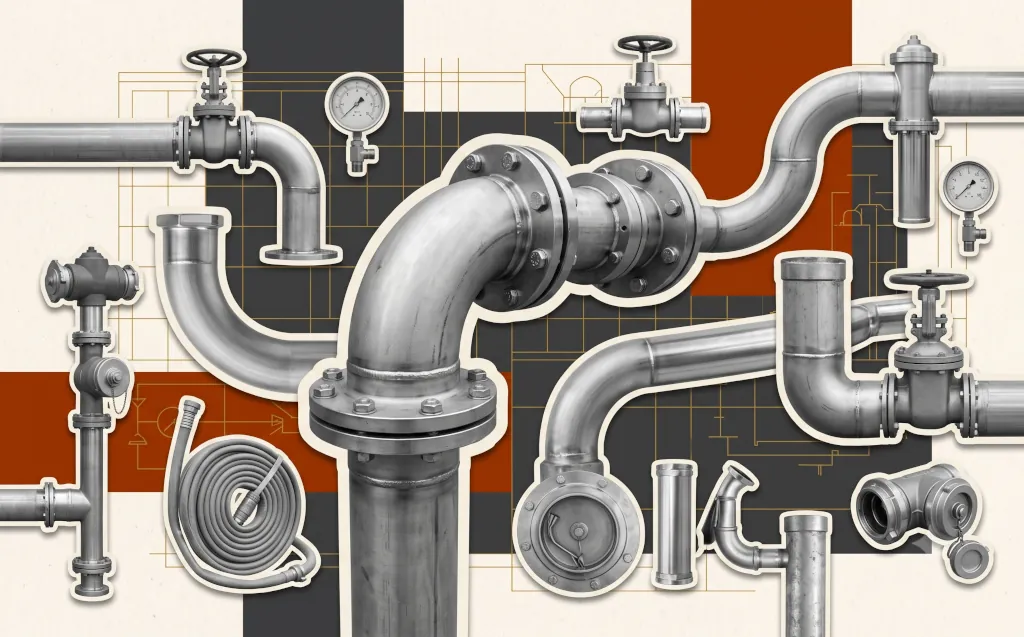
A pipeline is only as useful as its route, supports, connections and access. Bharatiya Saman supports industrial pipe fabrication and fire-hydrant work for factories, workshops, farms, buildings and utility projects. We consider where the line starts and ends, what it carries, the available headroom, maintenance access, drainage, isolation and the structures that will carry it. The aim is a clean, practical installation that can be understood and serviced after handover.
Talk to the workshop
Applications and scope
Work may include utility water, process water, compressed-air support, discharge lines, tank connections, pump rooms, hydrant headers, branch lines, supports, manifolds and equipment tie-ins. Fire-hydrant arrangements require careful attention to route, valve access, hose or landing-valve locations and clear identification. Existing lines can also be altered or extended when a plant layout changes.
Materials and construction
Pipe material, diameter, wall thickness, jointing and coating depend on pressure, medium, temperature, exposure and the applicable project specification. Supports and anchors should account for span, vibration and thermal movement. We can work with contractor drawings and site standards, or help organise the practical fabrication details when the requirement is still at an early stage.
How we work
The first step is a route and interface review. Photographs, approximate lengths, equipment locations and a marked-up plan help identify clashes and access issues. Fabrication then follows the agreed dimensions, with flanges, branches, supports and valves coordinated before delivery. Site installation, modification and commissioning support can be included when the job requires it.
Planning your requirement
Share the medium, flow or pressure information available, connection sizes, route length, elevation changes, support points and delivery location. For hydrant work, include the protected area, water source and existing network information. Early coordination reduces rework around pumps, tanks, buildings and other services.
Delivery and ongoing support
Every Pipelines & Fire Hydrants project is planned with the next stage in mind: delivery, installation, commissioning and maintenance. We can discuss the practical details that are easy to miss in a short product description, including lifting and access, connection points, inspection areas, replacement parts and the people who will operate the equipment. If the requirement changes after the first conversation, a clear revision is usually easier and safer than forcing an early assumption through the entire build. Share the latest drawing, measurement, photograph or site note when something changes. That keeps the workshop, contractor and end user working from the same information and helps the finished equipment earn its place in the operation.